Ports and harbours
Know what passed, and how fast.
Shore nodes on the approach and the moorings measure every passing vessel. The record shows who, when and how fast, sealed, so a harbour officer can act on it and stand behind it.
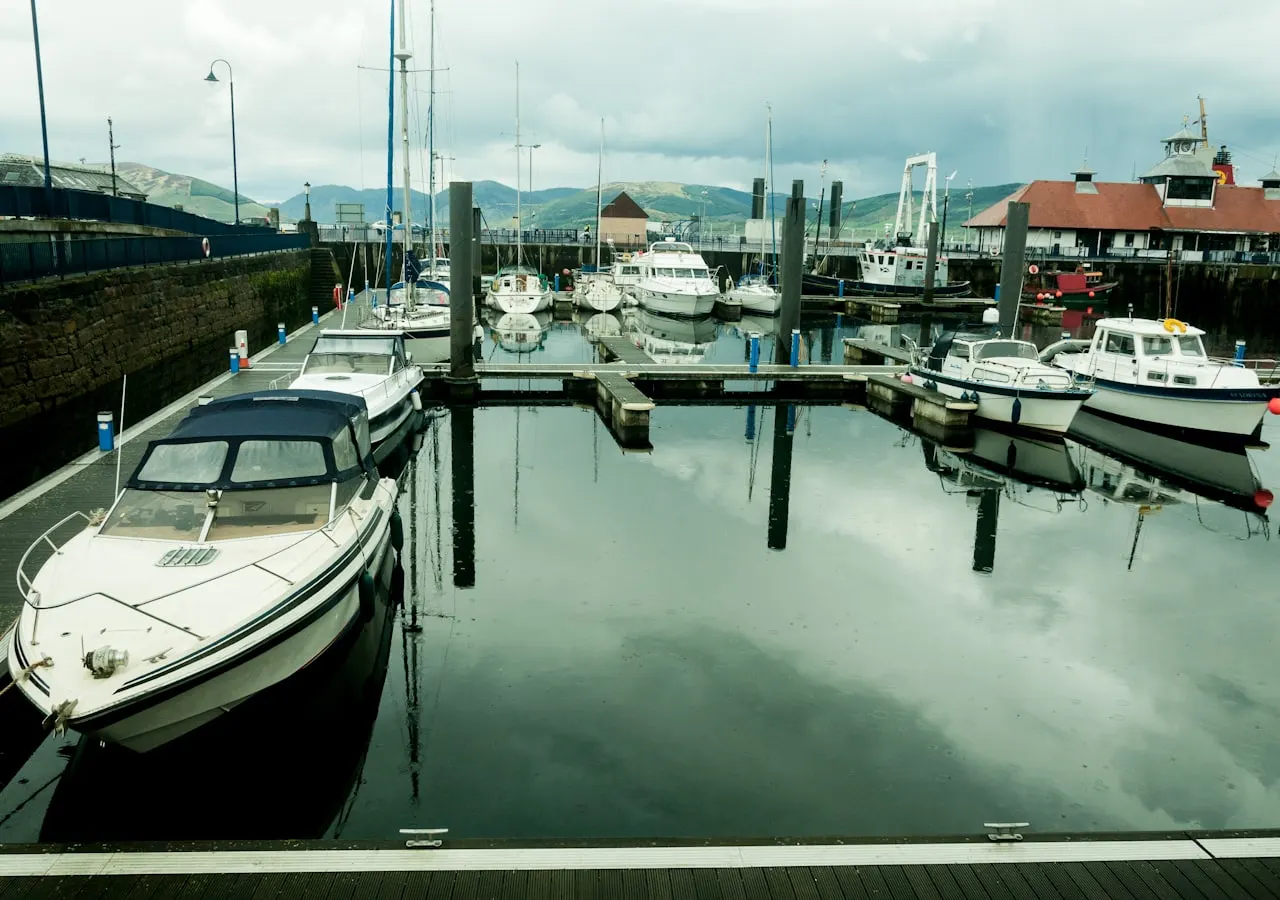
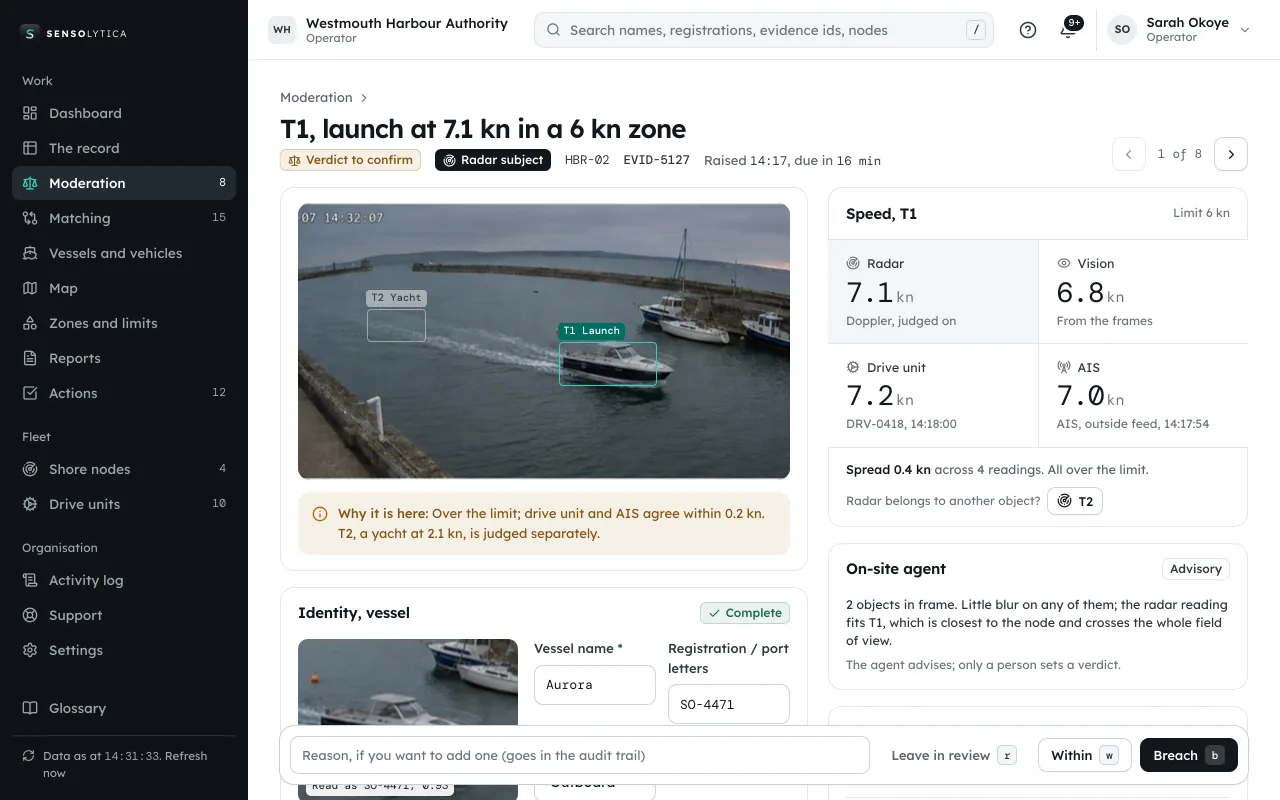
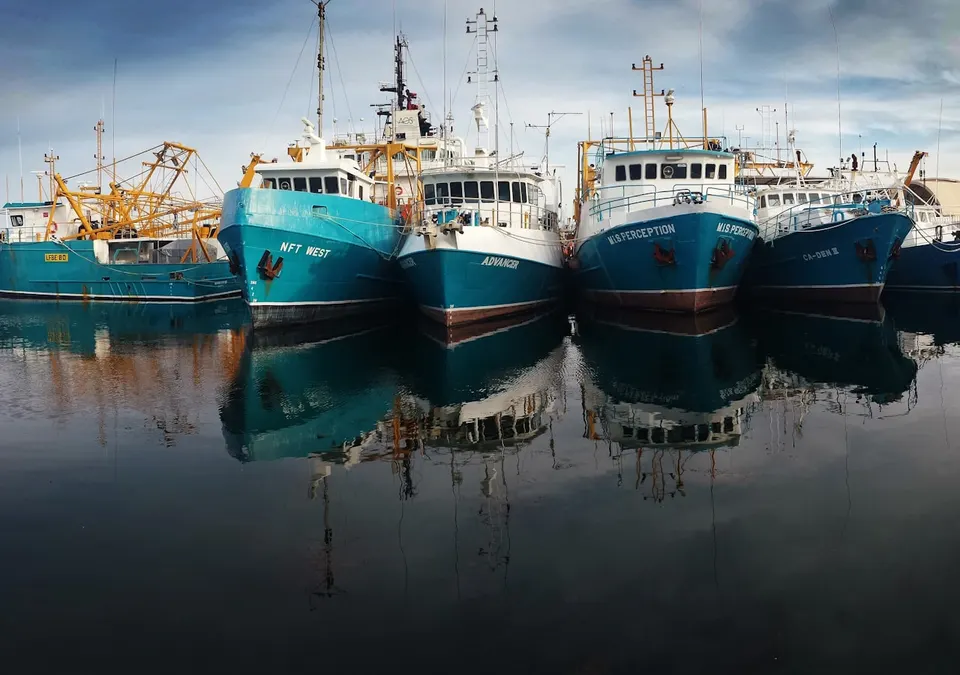
Photo placeholder until licensed. Portal with a demo organisation, data illustrative.
The questions every harbour gets.
Wash at the moorings
Damage to moored boats and banks from vessels going too fast, and no way to say which.
Complaints you cannot answer
A letter says a boat was speeding on Sunday. Without a record you cannot confirm or rule it out.
No record of who passed
Patrols see a fraction of the traffic. Most passes go unrecorded.
Speeds nobody agrees on
A harbour officer's estimate against a skipper's word, and nothing to settle it.
The Westmouth approach.
Illustrative, fictional harbourA queue, not a fine.
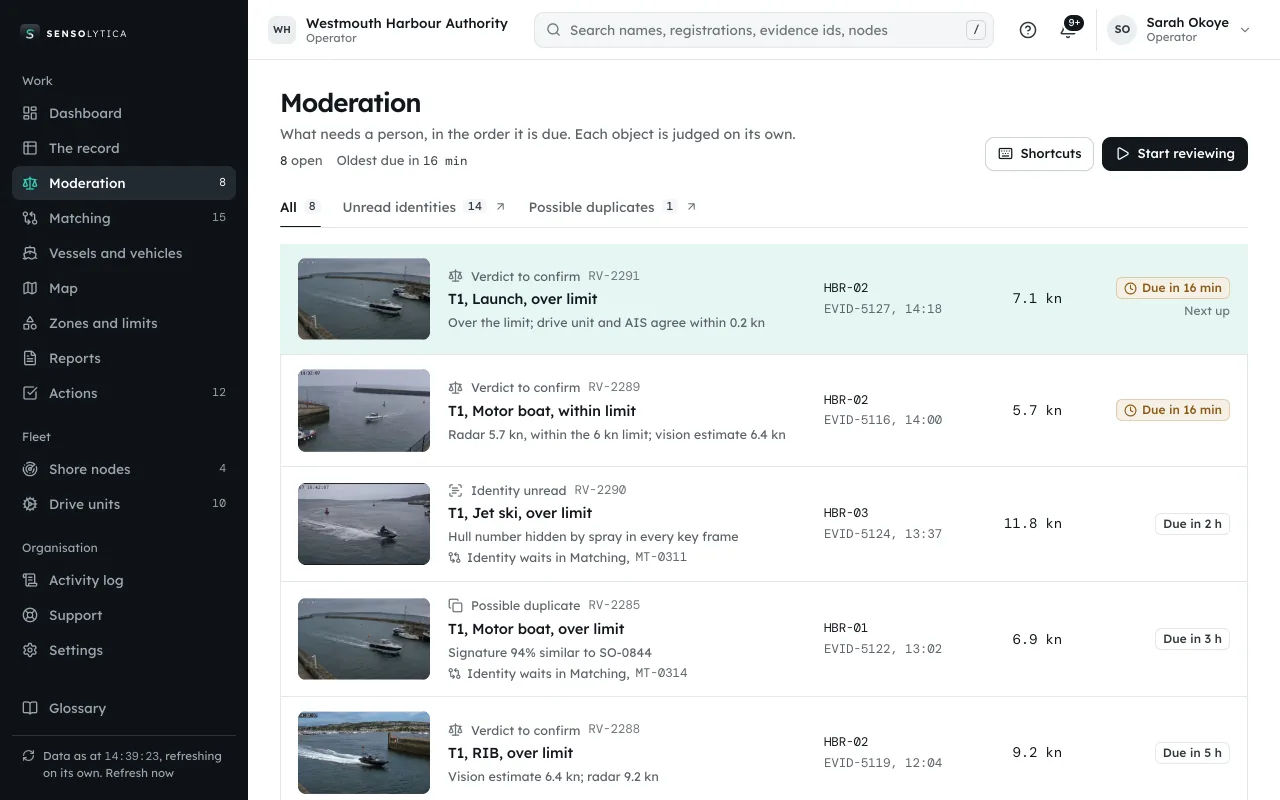
Readings over the limit wait for a harbour officer. They see the readings, the sources and the images, and decide. Nothing goes out without a person.
What a harbour gets.
Shore nodes
On the walls and posts that see the approach and the moorings.
The portal
Every vessel's record, a review queue and zones you draw.
Evidence packs
For a letter, a byelaw case or a complaint, in one export.
The API
Into your harbour management system, if you have one.
Westmouth, in one record.
Two shore nodes on the approach, one season, and a harbour that can answer every complaint with a sealed record.
Read the case studyPut a record on your approach.
Thirty minutes with an engineer: your units, your sites, and a sealed record from start to finish.