The problem
Complaints about wash at the moorings had doubled in two seasons. The harbour had no record of who passed or how fast, and patrols covered a few hours a week.
Case study, illustrative
How a small harbour authority went from disputed estimates to a sealed record of every pass, in one season.
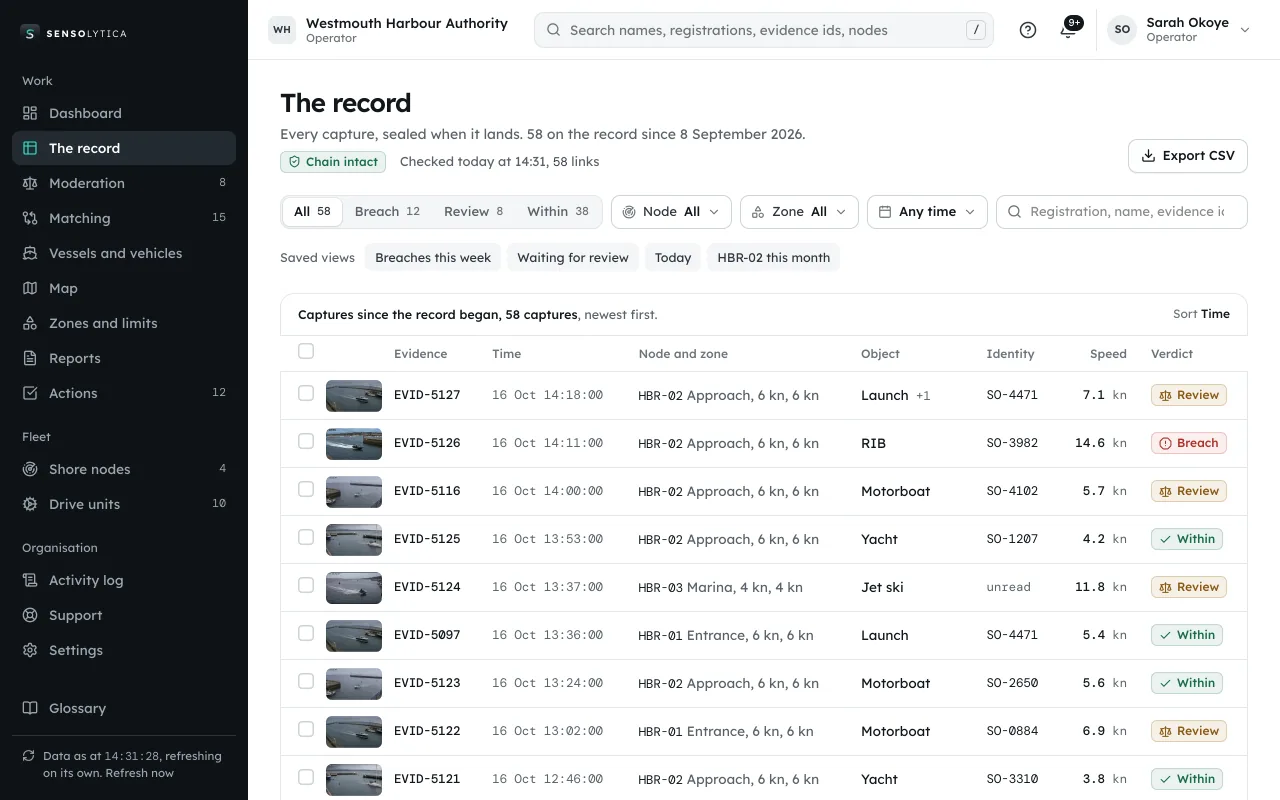
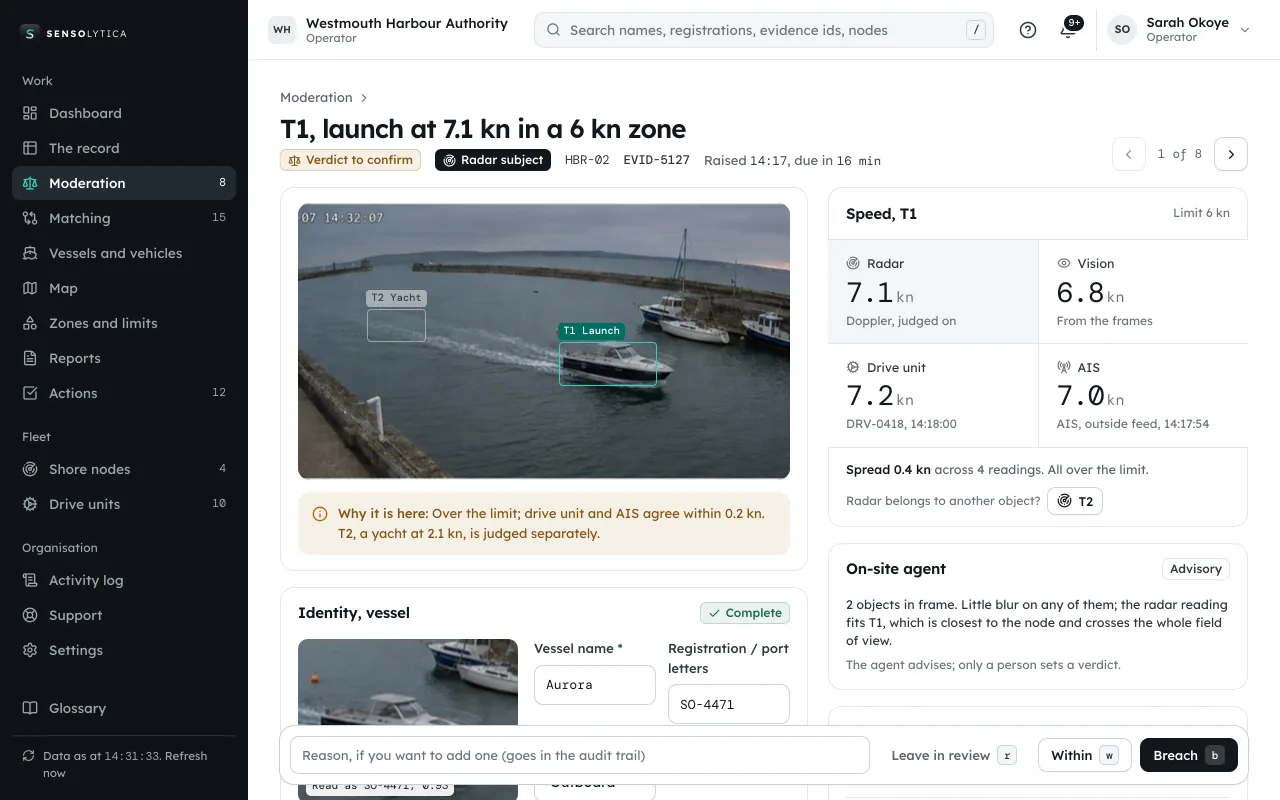
The portal with its demo organisation, Westmouth Harbour Authority, which is fictional. Data illustrative.
All figures illustrative.
Complaints about wash at the moorings had doubled in two seasons. The harbour had no record of who passed or how fast, and patrols covered a few hours a week.
Two shore nodes on the approach, one on the harbour wall at HBR-02 and one on a post by the moorings. Fitted in a morning each, no mains.
Every pass recorded and sealed. Readings over the 6 knot limit went to a review queue; harbour officers decided each one, and wrote to skippers with the record attached.
Aurora, 14 August. Over the limit at the shore node, confirmed by her own drive unit and AIS. The harbour officer decided, and the skipper received the record.
Thirty minutes with an engineer: your units, your sites, and a sealed record from start to finish.